
Light Switch Is Hot: What It Means and What to Do Now
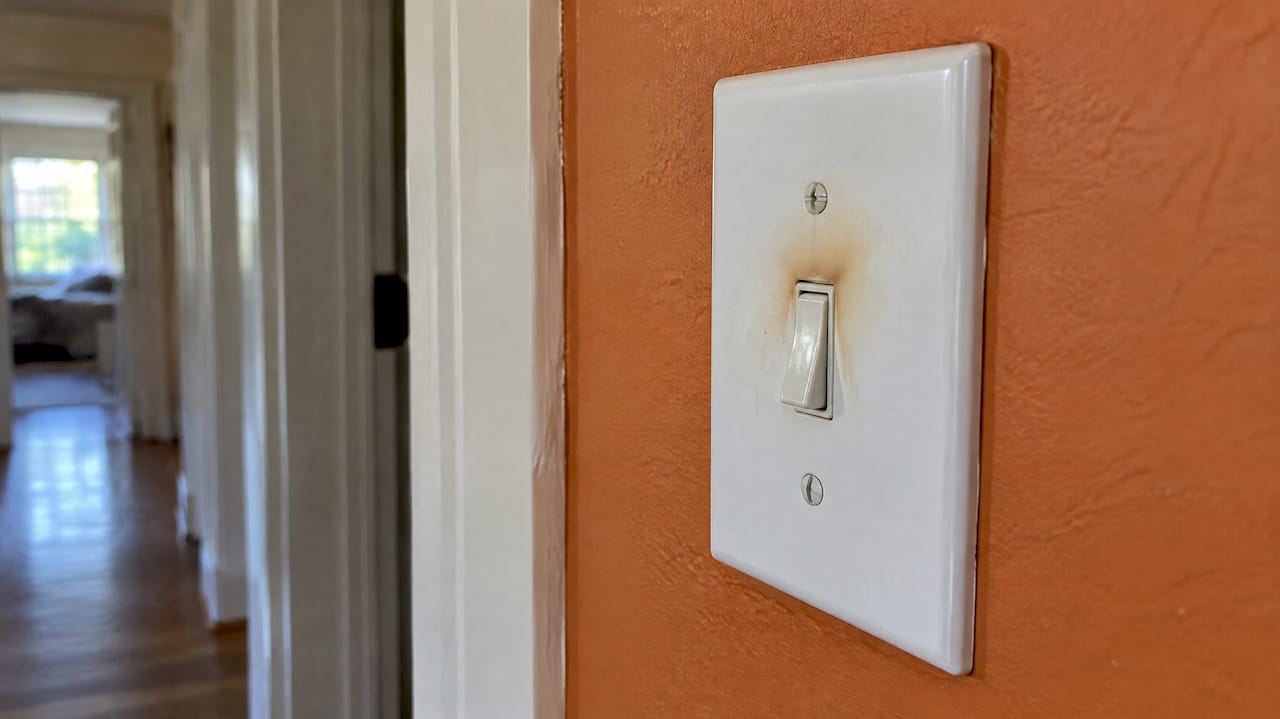
A light switch that feels hot, not just slightly warm, should not be used. Stop using it, leave the cover plate alone, and have a licensed electrical contractor look at it. Federal safety guidance treats a hot switch plate as a potential fire hazard, and the cause is usually a loose connection, a worn switch or an overloaded circuit. In San Diego, we replace switches and outlets with licensed electrical contractors at a published rate.
TL;DR
- Warm is sometimes normal, especially on a dimmer. Hot, painful to touch, or discolored is not.
- If a switch is hot, stop using it and call a qualified electrician as soon as possible.
- Sparks, buzzing, a burning smell, flickering lights or repeated breaker trips along with the heat mean the problem is more urgent.
- Do not open the switch or tape over it to see what is wrong. Finding and repairing wiring defects is professional work.
- We charge a $159 service call that includes the first hour, then $39.75 per 15 minutes.
Table of Contents
- Warm versus hot: how to tell the difference
- Why a light switch gets hot
- What to do right away
- Other signs that point to a wiring problem
- Who fixes a hot switch
- What it costs in San Diego
- If a dimmer is the culprit
- Our view on hot switches
- Book the switch replacement
- Renters and roommates
- FAQ
- Sources
Warm versus hot: how to tell the difference
The U.S. Consumer Product Safety Commission (CPSC) says switch plates may be warm but should never be hot, meaning painful to touch, or heat-discolored. Its separate home electrical checklist notes that some dimmers may become warm in normal use. A dimmer controlling several bulbs can feel mildly warm after an evening of use.
Use this rough guide:
| What you notice | What it may mean | What to do |
|---|---|---|
| Slightly warm dimmer, no other signs | Normal operation for many dimmers | Watch it, and mention it to an electrician at the next visit |
| Warmer than usual, standard on/off switch | Possible loose connection or worn switch | Stop using it and book an electrician |
| Too hot to hold your hand on | Potential fire hazard | Stop using it now and get help as soon as possible |
| Brown or yellow discoloration, melted plastic | Heat damage | Stop using it, turn off the breaker if you can do so safely, and call |
A standard on/off switch carries little electrical load of its own, so heat in one deserves more attention than heat in a dimmer.
Why a light switch gets hot
The CPSC says a loose screw holding a wire, or a worn-out switch, can lead to arcing, overheating or fire. Arcing means electricity jumping across a gap, and it produces intense heat in a very small space. The common causes:
- A loose wire terminal. Wires held by a loose screw or a push-in connection create resistance, and resistance makes heat. This is the most common reason a switch warms up.
- A worn or failing switch. Contacts inside wear out over years of use, especially in older homes with original switches.
- Too much load. Bulbs above the fixture’s recommended wattage can overheat the fixture, wiring or nearby materials. A switch feeding that fixture may feel the heat too.
- A dimmer mismatched to its bulbs. Dimmers are rated for a maximum load. Swapping to a different bulb type or adding fixtures to the circuit can push one past what it handles comfortably.
- Damaged or aging wiring behind the wall. Heat at the switch can be the visible end of a problem you cannot see.
You can check the bulb wattage on the fixture with the power off and the bulbs cool. That is the only inspection we suggest. Everything inside the wall box belongs to a professional.
What to do right away
- Stop using the switch. The CPSC advises discontinuing use immediately and getting help from a qualified electrician as soon as possible. The New York City Fire Department gives the same instruction: do not use hot switches and have a licensed electrician check the wiring.
- Turn off the light’s circuit at the breaker panel if the switch is very hot, discolored, buzzing or smells burnt. If you smell smoke or see flames, leave the house and call 911.
- Do not remove the cover plate or touch the screws. Live wires sit right behind it.
- Note what you saw. Which switch, how long it has been warm, whether lights flicker, whether the breaker has tripped. This shortens the diagnosis.
- Book a licensed electrician. Do not wait for it to get worse.
If the switch controls something you need, like a kitchen light, a temporary lamp is a better plan than using a switch you suspect.
Other signs that point to a wiring problem
Heat rarely arrives alone. The CPSC lists repeated breaker trips, dim or flickering lights, arcs or sparks, sizzling or buzzing, hot-insulation odors and heat-discolored parts as warning signs. It also says visible sparking when you operate a switch calls for evaluation by a qualified electrician.
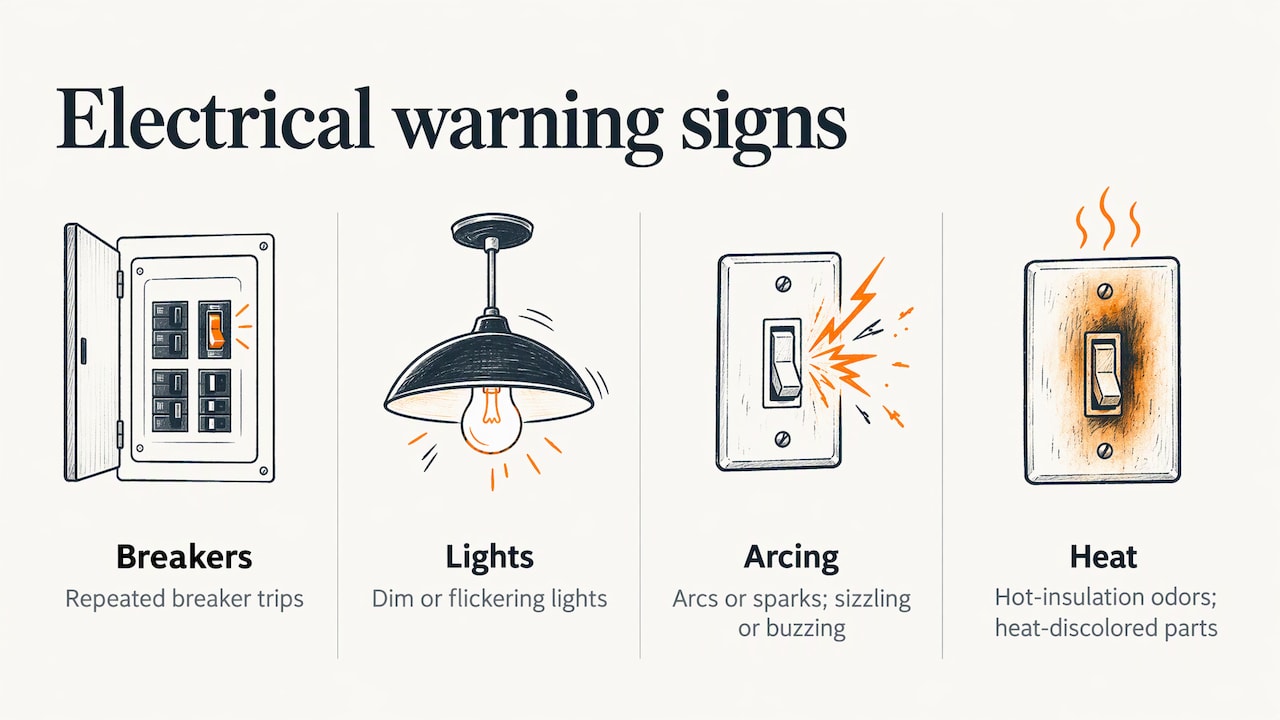
The National Fire Protection Association (NFPA) adds warm or discolored outlets, tingling shocks and frequent breaker problems to the list and says to contact a qualified electrician or your landlord. The Electrical Safety Foundation International lists discolored switches, warm outlets and shocks or tingles as possible signs of a serious wiring problem or failing device.
If you rent, tell your landlord in writing and keep a copy. If you manage properties, a hot switch in a unit is a same-week item, not a wait-for-turnover item.
Who fixes a hot switch
The CPSC says its guide exists to help you spot hazards before seeking help, and that finding and repairing specific electrical defects is a job for qualified electrical professionals. That rules out the usual forum advice to open the box and tighten things yourself.
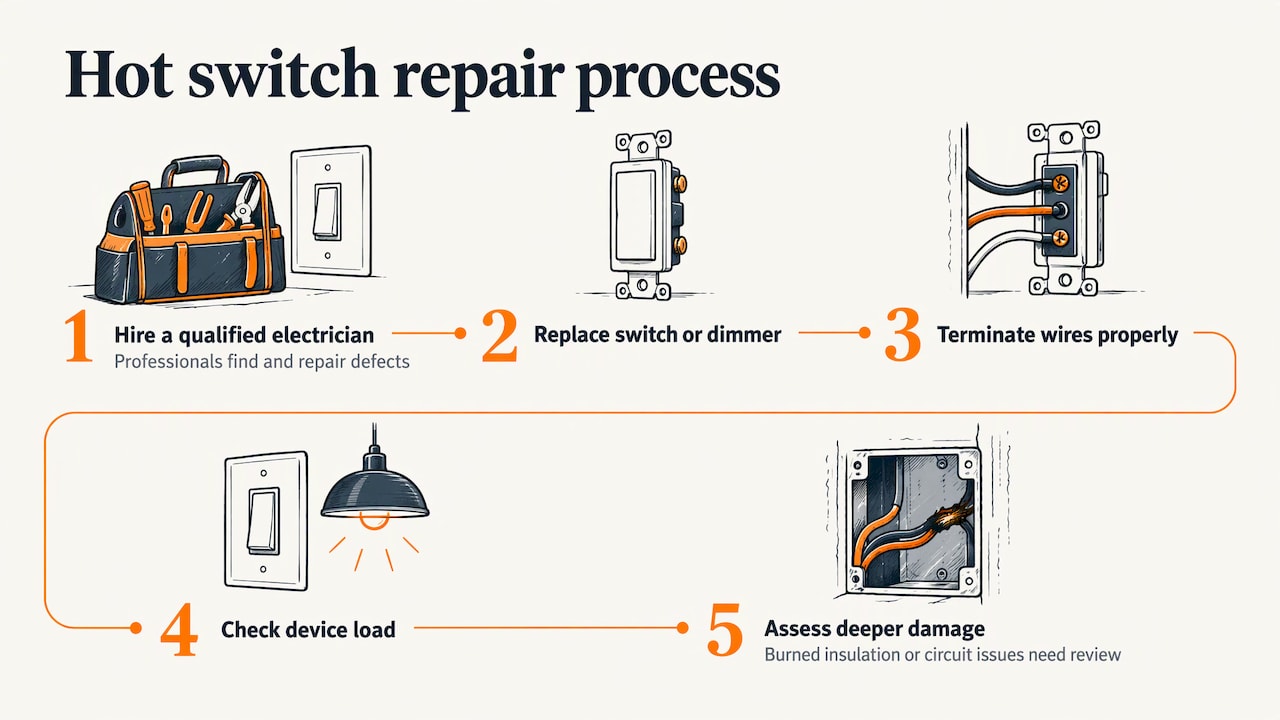
The usual fix is small: replace the switch or dimmer, make sure the wires are properly terminated, and check that the load suits the device. That is a short visit, not a big electrical project. If the box shows burned wire insulation or the problem traces deeper into the circuit, the electrician will tell you what else is needed.
This is the kind of job we do. Our installers work with licensed electrical contractors, and a warranty covers every installation. Our outlet and switch installation page covers the devices we replace, including GFCI outlets and USB outlets. A GFCI is an outlet that cuts power fast when it detects current leaking, such as near water. NFPA advises testing GFCIs and arc-fault devices (AFCIs) after installation and monthly afterward, and replacing defective ones immediately through a qualified electrician.
What it costs in San Diego
Our pricing is public on the pricing page. A service call is $159 and includes the first hour. After that, time is billed at $39.75 per 15 minutes. You know the starting number before anyone arrives, which matters when you are worried about a switch in your wall.
We do not quote what a repair will cost before seeing the box, because we cannot know what is behind the plate. We can say that replacing a single failing switch is the sort of task that fits inside a service call. Replacing several switches in one visit, or pairing the fix with new light fixtures, is more efficient than separate trips.
If a dimmer is the culprit
A warm dimmer is the most common borderline case. Reasons to have it swapped rather than leave it:
- It is hotter than it used to be.
- You changed bulbs, for example from incandescent to LED, and the heat or flicker started afterward.
- It buzzes or hums.
- The faceplate is discolored.
A replacement matched to your bulbs and total load usually resolves it. Tell the installer what bulbs the circuit runs and how many.
Our view on hot switches
A hot switch is one of the few home problems where waiting costs more than acting. The part is cheap and the visit is short. The fire risk is the reason to move fast.
I have been remodeling homes for about 20 years, and the pattern is familiar: a switch that has been warm for months in a house with older wiring or a dimmer someone loaded with too many bulbs. People put up with it because nothing has gone wrong yet.
That is why we publish one rate. A $159 service call with the first hour included takes away the guesswork about what a small electrical swap will cost. You should be able to call, talk to a real person, and get a licensed contractor to replace the switch this week.
Our work is fixtures and devices: switches, outlets, lights, fans. If it is a hot switch, we want to replace it for you properly and leave the wall clean.
Matt, Switch Your Fixture
Book the switch replacement
If a switch in your San Diego home is running hot, we can replace it with licensed electrical contractors. Call (619) 677-8677, Monday to Friday, 8:00 AM to 5:30 PM, or book online. Our rate is a $159 service call including the first hour, then $39.75 per 15 minutes.

While we are there, it is a good time to replace other worn switches or dated light fixtures in the same visit.
Renters and roommates
If you share a place, a hot switch is a safety issue you report, not one you fix. Safety tips for renters and roommates can help you think through what to raise with a landlord or housemate. Send the report in writing and name the switch location.
FAQ
Is it normal for a light switch to be warm?
Sometimes. The CPSC says some dimmers may become warm in normal use, and switch plates may be warm. They should never be hot to the point of pain or discolored. If a standard switch feels warmer than before, treat that as a reason to have it checked.
Can a hot light switch start a fire?
Yes. The CPSC says loose wire screws and worn-out switches can cause arcing, overheating or fire, and it treats hot switch plates as a potential fire hazard. Stop using the switch and have an electrician check it.
Why do my light switches shock me when I touch them?
A tingle or shock from a switch is a warning sign of a wiring problem or failing device, according to ESFI and NFPA. Stop touching the switch, turn off the circuit at the breaker if you can do so safely, and call a qualified electrician.
Can I fix a hot switch myself?
The CPSC says finding and repairing electrical defects is a job for qualified professionals. Stop using the switch and book a licensed electrician. We replace switches and outlets across San Diego for $159 including the first hour.
Sources
- CPSC Guide to Home Wiring Hazards
- CPSC Home Electrical Safety Checklist
- NFPA Electrical Home Fire Safety
- ESFI Home Safety
- FDNY Plug Into Safety